


Publishers are at the centre of a particularly vicious storm right now.
They face twin threats to traditional revenue streams from the digital publishing revolution that is gathering pace and the growing brand fragmentation associated with the exponential growth of social media. They are in danger of being swamped.
What is happening in the digital world is a split between ‘hyper-connectivity’ and ‘hypo-connectivity’ with publishers struggling to capitalise on the vast potential of the centre ground. What they need (and need fast) are ways of generating new revenue streams while at the same time protecting and developing their brands.
The solution involves a return to ‘collective intelligence’, the original idea behind the Internet (as created at DARPA, the US Pentagon’s Defence Advanced Research Projects Agency, and developed by scientists, for scientists, to collaborate, share expert knowledge and mine collective intelligence). This movement has been dubbed the ‘Second Curve of Internet Development’ and is at the cutting edge of the new ‘sharing economy’.
As the desire for, and benefits of, the sharing economy increase, so the recognition that this applies as much, if not more, to the ‘knowledge economy’ is growing.
To enable publishers to be at the forefront of this rapidly growing market they need to move to the centre ground - the Connectivity Sweet Spot - between the equally disadvantageous areas of hyper- and hypo-connectivity. The Goldilocks scenario.
Hyper-connectivity, or over-connectivity, reflects the noisy social media dominated sphere of the digital world. In a recent article in WIRED (‘Data oversupply is unplugging our brains’) Samuel Greengard wrote: ‘The overload of data…..spawns ever-growing confusion about what’s beneficial and what isn’t so good. Amid all the confusion, we throw up our hands and give up’.
Also writing in WIRED, Ian Leslie (‘Don’t let curiosity be killed by cats’) pointed out that: ‘A few years ago a Reddit user posted the following question: “If someone from the 1950s suddenly appeared today, what would be the most difficult thing to explain to them about life today?” The most popular answer was this: “I possess a device, in my pocket, that is capable of accessing the entirety of information known to man. I use it to look at pictures of cats and get in arguments with strangers."'
Being connected shouldn’t be thought of as an end in itself, it should be a means to an end: discovering new information through trusted expert responses. The ability to search for answers, usually through the extremely efficient and ubiquitous Google and Wikipedia, isn’t necessarily generating the type of expert response required to further the breadth and depth of collective intelligence.
The level of distraction and competition these tools provide simultaneously threatens the traditional revenues of publishers while not guaranteeing the same level of expert knowledge. Their sheer scale and speed is preventing publishers, often hindered by old technology, from getting their message across, even though they are the ones with the higher quality information. The immediacy and scale of the threat needs an innovative and rapid solution.
Hypo-connectivity, or under-connectivity, on the other hand, reflects the fact that even where publishers do have valuable resources they aren’t utilising them to anywhere near their full potential. The resources in question are the pools of experts at the very heart of their organisations, that their traditional corporate structures and business models seem to go out of their way to make largely inaccessible and undiscoverable.
Giving publishers the ability to survive this digital onslaught and thrive in the new world order requires a digital platform that can both quieten the noise of the web and provide curated access to their experts in a way that only knowledge networks can achieve, making them both more discoverable and accessible to each other and to their customers while simultaneously protecting them from the excessive noise and distractions of social media.
Enabling this in the most efficient and effective way to allow a return to the initial principles of collective intelligence and expert knowledge sharing is precisely what Zapnito’s platform delivers. Putting experts front and centre, getting their voice heard by an ever increasing audience. Allowing new revenue generation through access to expert knowledge while reversing the brand fragmentation encountered by customers - the Connectivity Sweet Spot.
Publishers are clearly well represented at the heart of this, but it also provides a universal solution to any organisation with experts at their core. By deploying a smart interface, organisations can make their pool of knowledge available to more people, bringing it to life and developing it in an efficient, effective and meaningful way through creative engagement. This enables them to increase the value of their expert communities, mine collective intelligence, reclaim their customers’ focus and boost engagement, helping their audiences to learn from their experts in a more powerful way.
In their article for the Guardian ‘Forget the internet of things – we need an internet of people’ Jenny Judge and Julia Powles raise a number of interesting points that reflect the crucial need to re-engage with, and increase access to, experts. Of particularly relevance is the following quote: ‘We need to stop obsessing over “smart” objects, and start thinking smart about people.’
They also pose this question towards the end of their article ‘[I]t’s hard to see what this [internet of smart, empowered people] would look like, exactly.’
I agree, but whatever it look likes, I’m confident it will be powered by Zapnito.
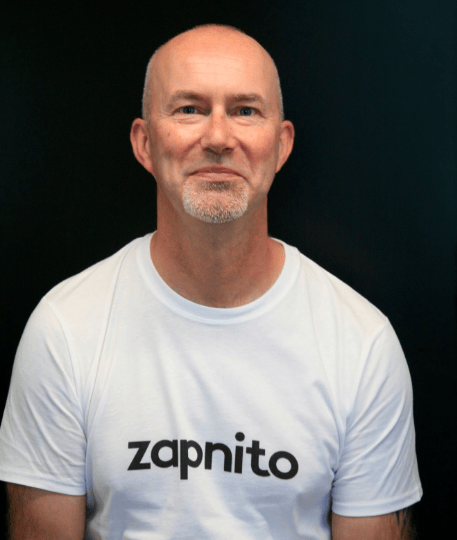
My academic roots are in economics and mathematics and my professional roots are in financial analysis. My background has given me a wealth of experience in research, data interpretation and analysis. I have a close attention to detail, innate curiosity and ‘big picture’ awareness that I use to support the rest of the Zapnito team in truly understanding our customers' businesses. My aim is to ensure that both they and we succeed.